
Understanding the Properties of Machined Stainless Steel Parts
When it comes to CNC machining, the choice of materials plays a critical role in determining the functionality and performance of the final product. One of the most favored materials in this domain is stainless steel, renowned for its impressive properties that make it suitable for a myriad of applications. By focusing on machined stainless steel parts, manufacturers can create components that offer superior durability and resistance, essential for industries ranging from medical to chemical processing.
Corrosion Resistance in Harsh Environments
Stainless steel is inherently resistant to corrosion due to the presence of chromium, which forms a passive layer of chromium oxide on the surface. This layer acts as a barrier against moisture and other corrosive agents. In environments where moisture and chemicals are prevalent, this property becomes invaluable. For instance, in the food processing industry, components must withstand cleaning agents, high humidity, and the potential for microbial growth. Stainless steel's corrosion resistance ensures that these components maintain their integrity over time, providing safety and reliability in food contact applications.
Strength and Durability Features
The mechanical properties of stainless steel, particularly its tensile strength and fatigue resistance, make it a suitable choice for machined parts that must endure high stress and temperature variations. The addition of alloying elements such as nickel and molybdenum enhances strength and ductility, which is critical in applications like surgical instruments and aerospace components. These properties not only ensure functionality but also prolong the lifespan of the parts, reducing the need for frequent replacements and thus lowering operational costs.
Applications Across Various Industries
Due to their outstanding properties, machined stainless steel parts find applications across various industries. For instance, in the medical sector, they are utilized in surgical instruments and implants, where biocompatibility, sterility, and corrosion resistance are paramount. In the food processing industry, stainless steel's non-reactive nature ensures safe interaction with food products, making it the material of choice for both equipment and processing lines. Similarly, in the chemical industry, where materials face severe corrosive environments, stainless steel components can hold up against aggressive chemicals and temperatures.
CNC Machining Processes for Precision Parts
CNC machining is a critical manufacturing process that leverages computer-controlled equipment to produce high-precision components from various materials, including stainless steel. The ability to execute precise cutting, milling, and drilling operations allows for the creation of complex geometries and tight tolerances, which are essential in today's manufacturing landscape.
Common Techniques in CNC Machining
Among the various CNC machining techniques, milling and turning are the most prevalent. Milling is used for producing flat surfaces, complex contours, and asymmetrical features through rotating cutter engagement, while turning involves rotating the workpiece against a stationary cutting tool to create cylindrical shapes. Each technique has its unique advantages and suitability based on the component specifications and required tolerances.
The Role of CAD/CAM Software in Manufacturing
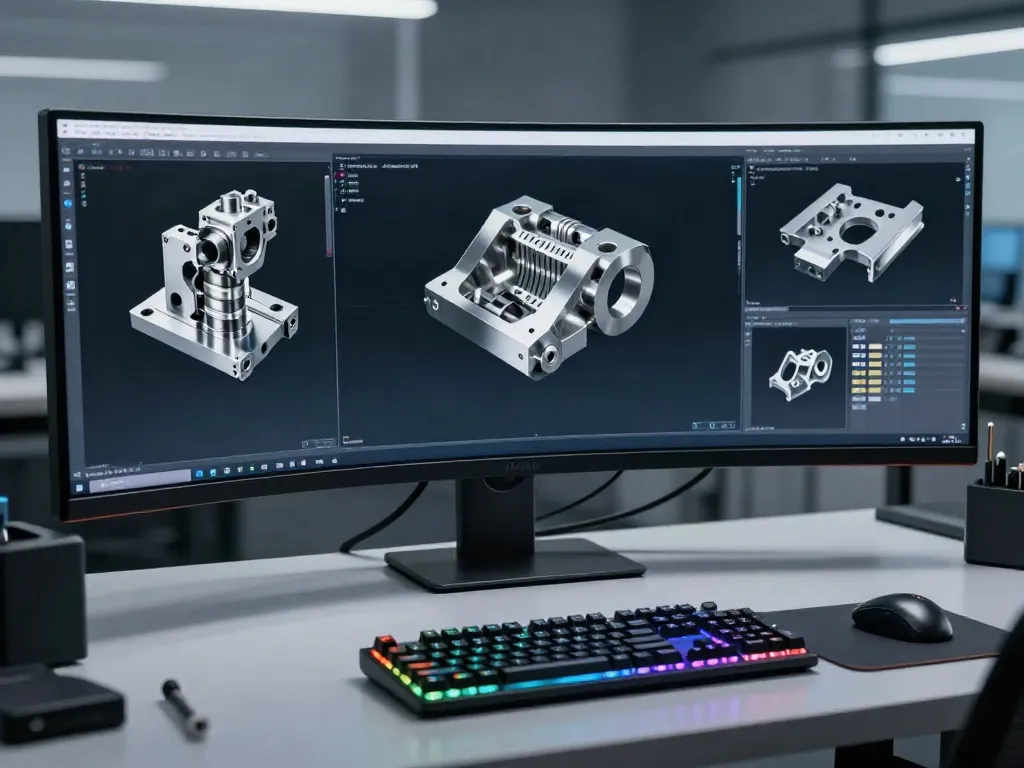
Computer-Aided Design (CAD) and Computer-Aided Manufacturing (CAM) software are integral to modern CNC machining processes. CAD software enables engineers to create detailed 3D models of parts, allowing for enhanced visualization and design validation. CAM software takes these designs and converts them into machine instructions, optimizing tool paths for efficiency and precision. This integration of CAD and CAM not only streamlines the manufacturing process but also enhances the accuracy and repeatability of machining operations.
Importance of Tolerance and Quality Control
Precision in CNC machining is greatly influenced by the tolerances specified during the design phase. Tolerances, which dictate the allowable variation in dimensions, must be adhered to closely to ensure part compatibility and functionality. Rigorous quality control measures, including the use of advanced measuring equipment such as Coordinate Measuring Machines (CMM), are crucial in validating that parts meet their specified tolerances. These practices help mitigate defects and ensure customer satisfaction.
Choosing the Right Stainless Steel Grade
Selecting the appropriate stainless steel grade is essential for achieving optimal performance in specific applications. Different grades offer varying characteristics, and understanding these can significantly impact the functionality and durability of the machined parts.
Effects of Different Alloys on Performance
The performance of stainless steel parts can differ dramatically depending on the alloying elements. For example, 304 stainless steel, known for its excellent corrosion resistance and good weldability, is commonly used in food processing and kitchen applications. In contrast, 316 stainless steel includes molybdenum, making it superior for marine applications where additional corrosion resistance is necessary. It is also crucial for chemical processing environments due to its enhanced durability under aggressive conditions.
Comparative Analysis of Material Properties
A comparative analysis of stainless steel grades reveals significant differences in properties such as yield strength, elongation, and hardness. For instance, Martensitic stainless steels, like 410, have higher hardness and wear resistance, making them suitable for cutting tools and wear plates. In contrast, austenitic grades like 304 offer excellent ductility and are ideal for parts requiring extensive forming and shaping.
Common Stainless Steel Grades used in Machining
- 304 Stainless Steel: Excellent corrosion resistance, widely used in food and beverage applications.
- 316 Stainless Steel: Superior resistance to pitting and crevice corrosion, ideal for marine and chemical applications.
- 430 Stainless Steel: Offers good oxidation resistance and is often used in kitchen appliances.
- 17-4 PH Stainless Steel: A precipitation-hardened grade known for high strength and hardness, used in aerospace components.
Innovative Technologies in CNC Machining
The landscape of CNC machining is continuously evolving, integrating innovative technologies that enhance manufacturing efficiency, flexibility, and performance.
Emerging Trends in CNC Machining Technology
One notable trend is the adoption of additive manufacturing techniques alongside traditional CNC machining methods. This hybrid approach allows manufacturers to create geometrically complex parts that may be difficult to machine entirely from solid material. Additionally, advancements in materials science have led to the introduction of new alloys and composites that combine the benefits of traditional materials with enhanced performance characteristics.
AI and Machine Learning in Manufacturing
Artificial Intelligence (AI) and Machine Learning (ML) are being increasingly leveraged to improve manufacturing processes by predicting equipment maintenance needs, optimizing supply chains, and enhancing part quality. These technologies allow for real-time monitoring of production processes, ensuring that any deviations from the planned characteristics can be swiftly addressed, thus maintaining production efficiency and quality.
Impact of Automation on Production Efficiency
Automation in CNC machining processes has significantly transformed the manufacturing landscape by reducing reliance on manual labor while increasing productivity. Automated CNC machines can operate continuously with minimal human intervention, thereby reducing labor costs and minimizing the risk of human error. This shift not only boosts operational efficiency but also enhances overall product quality, achieving higher standards of precision and consistency.
Best Practices for CNC Machining Design
To ensure successful machining outcomes, design engineers must adopt best practices that facilitate manufacturability and optimize production costs.
Designing for Manufacturability
Designing for manufacturability (DFM) involves considering the capabilities and limitations of CNC machining during the design phase. Simple geometries requiring less machining time and fewer tool changes generally lead to reduced costs and improved turnaround times. Incorporating features that ease the assembly process, such as self-locating components, also helps minimize manufacturing complexity.
Optimizing Part Complexity and Cost
While complex designs may be necessary for certain applications, balancing complexity with cost-effectiveness is vital. By assessing the trade-offs between design intricacies and the implications for machining time and material usage, engineers can arrive at more optimized solutions. Implementing techniques such as concurrent engineering allows teams to collaborate in identifying potential design issues early in the product development cycle.
Feedback Loops between Design and Manufacturing
Establishing feedback loops between design and manufacturing teams enhances communication and enables iterative improvements. By sharing performance data and insights, manufacturers can refine processes and designs based on real-world outcomes. This collaborative approach helps align both teams toward the common goal of producing high-quality parts efficiently.
FAQs
What industries benefit the most from machined stainless steel parts?
Industries that heavily rely on machined stainless steel parts include medical, food processing, chemical, and aerospace. Each industry values the strength, corrosion resistance, and reliability of these components in critical applications.
How can design changes impact the fabrication process?
Design changes can significantly impact the fabrication process by altering tolerances, materials, and manufacturing techniques. Changes may lead to increased production times and costs, as well as potential impacts on the integrity and performance of the final product.
What are the best practices for sourcing stainless steel materials?
Sourcing stainless steel materials effectively requires understanding vendors' certifications, ensuring compliance with industry standards, and assessing the quality of materials based on chemical composition and mechanical properties. Establishing long-term relationships with reputable suppliers also ensures consistent quality and availability.